
Instrument manages 400+ people across 200 projects with Íæż½ã½ã


Key results:Â
- Replaced spreadsheets with Íæż½ã½ã to manage 400+ people across 200 projects, improving visibility and reducing unnecessary freelance spend
- Used Íæż½ã½ã’s reporting to uncover workload trends and renegotiate project scopes or fees based on real-time data
�
When top brands want to make a lasting impression online, they turn to Instrument—the creative and technical minds behind some of the most unforgettable websites, campaigns, and products for Google, Nike, Uber, and Oura.
Using Íæż½ã½ã, Instrument has built a centralized, scalable system to manage hundreds of people and projects.
The challenge: no real-time data, just spreadsheets and guesswork
Instrument has created a unique agency-within-an-agency model, where specialized teams serve different client needs. While this allows each team the autonomy to build dynamic, sustainable businesses, the structure sometimes results in uneven workloads, with some people being more overloaded than others.
Before the introduction of Instrument’s staffing and recruiting team, producers managed allocations in spreadsheets, manually adjusting weekly assignments to ensure no team member was over or underallocated.
"But the resourcing system was not scalable or visible to the agency at large,� says Andrew Barden, Senior Director of Delivery Operations.
As the agency grew, it was hard to tell who was underutilized and who was overloaded, sometimes leading to inefficient staffing decisions.Ìý
Instrument had introduced a smart “borrows and loans� system, an internal talent-sharing model where underbooked team members could be temporarily reallocated to busier teams. But the new process required a clear, up-to-date view of availability across all teams—something spreadsheets just couldn’t deliver.
We needed a centralized tool that is visible to all and that is adopted by all to use.
The solution: a single source of (real-time) truth
Since 2018, Instrument has used Íæż½ã½ã to allocate the right people to the right work—and they have never looked back.Ìý
By integrating Íæż½ã½ã with their HR system using the Íæż½ã½ã , they pull in employee data like name, role, location, and PTO, giving producers the ability to see real-time availability across all teams.
Using the Íæż½ã½ã , the staffing and recruiting team can easily identify available talent, negotiate allocations, and fill staffing requests. Íæż½ã½ã doesn’t just support the “borrows and loansâ€� system, it powers the process.Ìý
We implemented Íæż½ã½ã and we 100% couldn’t have run an effective business based on the borrows and loans model without it.
Íæż½ã½ã was a perfect fit because it was flexible enough to support Instrument’s unique approach to managing work. “We don’t track time or use timesheets,â€� says Laurel Burton, Instrument’s CEO. “We want to instill trust in our team, not monitor them by the hour. And we measure success by results and creativity, not time spent.â€� Íæż½ã½ã’s customization options let them track project progress and team capacity without compromising those values.
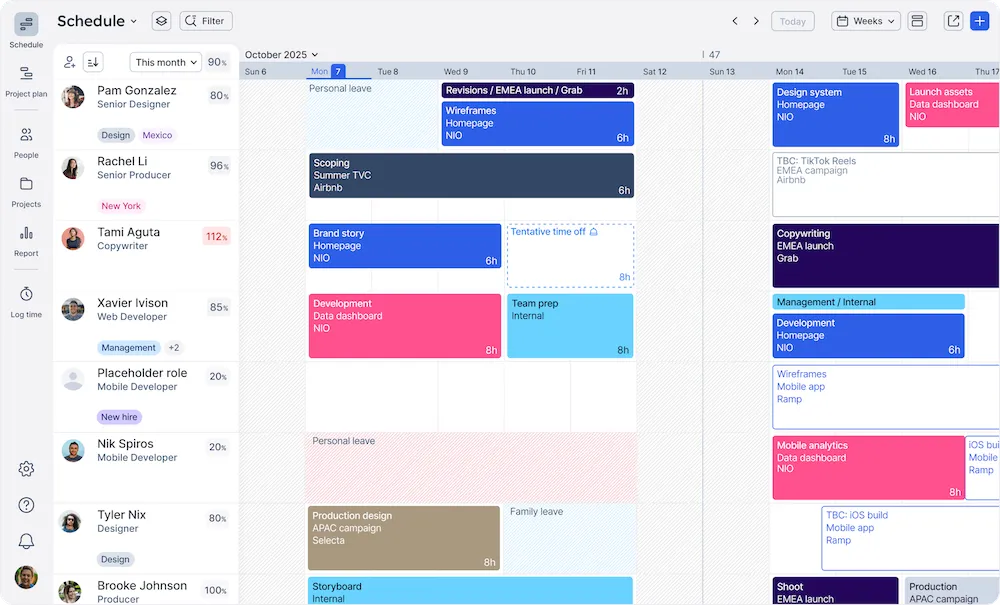
The results: a clear view of resourcing that cuts cost and removes guesswork
With Íæż½ã½ã, Barden and his team allocate talent efficiently, avoid unnecessary freelance costs, and make smarter resourcing decisions backed by real-time data.
The staffing and recruiting team can match the right skills to 200 projects across a 400-person talent pool without breaking a sweat
As Instrument takes on more complex client work, Íæż½ã½ã scales alongside them. With all their people and projects in one place, the staffing and recruiting team can confidently assign work. Need to loan a designer to another project? They open Íæż½ã½ã, find the right person for the job, and check fit and bandwidth before allocating tasks.
And because Íæż½ã½ã gives them a clear picture of internal availability, freelancers are only brought in when truly needed, helping keep margins healthy and projects on budget.
Íæż½ã½ã is the essential resource for understanding availability across the studio holistically in a scalable way.
Critical data is easy to see at a glance
in Íæż½ã½ã help uncover insights about capacity and project health that were previously hidden. Suppose a client’s project is consistently overstaffed or running over budget. In that case, the team can flag it early and investigate.
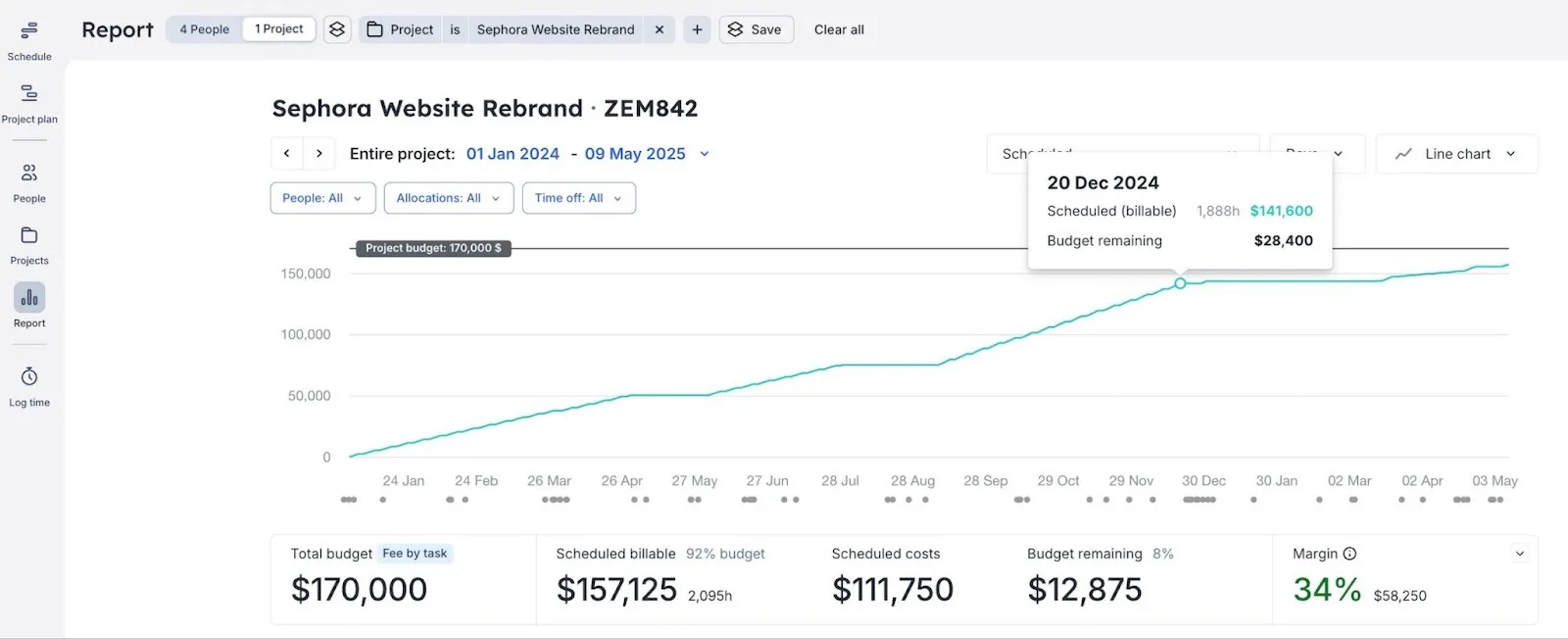
Íæż½ã½ã spotlights if we are consistently over budget with a client. We can start asking questions and making adjustments that increase the quality of our partnership and keep projects within budget.
Sometimes, it’s a staffing mismatch. Other times, it’s a signal to revisit the project scope or renegotiate terms. These insights enable Instrument’s leadership to make smarter resourcing decisions.
For Instrument, Íæż½ã½ã didn’t just replace spreadsheets: it replaced uncertainty. Today, Instrument runs with clarity, confidently building winning teams for project work.Ìý


